Home Blog Page 41

Giving Thanks for Things that Matter

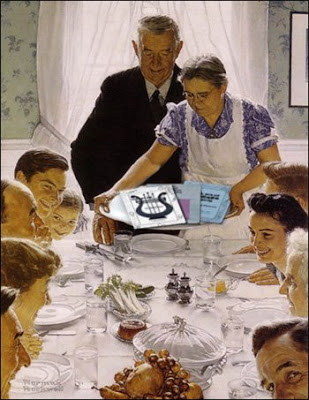
rockwell_want234It it that time of year here in America, when families typically get together during a holiday from work to share food and stories at the dining room table. It is an annual tradition where the opportunity to express thankfulness for family, life, and spiritual matters can be taken.

Along this line of thought:

Thanks to our readers

First and foremost, I would like to extend a hearty and sincere “thank you” to you, the reader of Horn Matters. Without your dedicated following, the articles on this web site would be something akin to shouting down a long, dark hallway.

Since instituting our updated site design last month, our traffic and Facebook followers have exploded. Your readership is the wind in our sails.

Thanks to our advertisers

Second, a big thanks to our third-party advertisers. Your support helps us to keep the lights on and the electricity running.

Incidentally, we do have a few remaining advertising slots available, and so if you are interested please contact us. Available spots include two areas on the home page – currently occupied by banners for the PDF Library and University of Horn Matters – and in the footer area of all article pages.

Thanks to tradition, pedagogy and history

For this category I would include the International Horn Society, the many fine, custom horn makers that keep experimenting with designs and equipment, and the fellow writers out there that continue to provide the horn community with rich and informative content. It is truly amazing how the state of our art keeps moving forward at an almost exponential pace.

Thanks to YouTube

Over the past few years, there has been an explosion of horn-related content appearing on YouTube. So much so that it is hard to keep up. Thank you to the many contributors who have taken the time to create and upload so much useful content.

A few outstanding examples would include:

Brief Reviews: Boldin plays Koetsier, and the Matosinhos “Little Suites” for Younger Hornists

0

A number of items have come in for review, and to start catching up on that today we have two 2013 products of interest.

First up is the CD Jan Koetsier: Music for Horn performed by James Boldin. This wonderful CD contains the following works of Koetsier, all either never or rarely recorded:

  • Sonatina, Op.59, No.1 for horn and piano (1972)
  • Romanza, Op.59, No.2 for horn and piano (1972)
  • Variations, Op.59, No.3 for horn and piano (1986)
  • Scherzo Brillante, Op.96 for horn and piano (1983)
  • 13 Études Caractéristiques, Op.117 (1989) – Rythme comme Le Sacre du Printemps
  • Chorale Fantasy, Op.89 for horn and organ (1981)
  • Sonata, Op.94 for horn and harp (1983)

Most of this music is completely new to me and I have to wonder why?? These are wonderful works, beautifully performed in a quality CD well worth buying. Do check out this CD and the works included in the collection, they are gems. It is available from many sources but the Amazon listing is here and direct from MSR Classics here.

IMGP5023The other 2013 publication I wanted to go back to and briefly highlight are the three volumes of horn solos for younger horn players composed by Ricardo Matosinhos. Published as Pequena Suite [Little Suite] numbers one, two, and three, he has created a very nice set of solos with piano for younger players. If you teach younger students and are tired of the OLD standards out there that make use of the same, limited range, these original works are certainly worth looking into. Movement titles include “Hello Siegfried!,” “Penta Blues,” “Drunkard’s Dance,” and “Heroic Rondo,” giving you an idea of the general styles and variety. They are published by AVA Musical Editions in Portugal.

Tying the present article together, a longer review of the Matosinhos publication may be found in James Boldin’s Horn World website, the review being by, you guessed it, James Boldin, the soloist on the Koetsier recording!

And be looking for more reviews of this type again in Horn Matters soon, we will aim to have brief and longer reviews of items of interest posted every few weeks.

Birth of a Brass Trio CD: Table for Three

Over the past several months I have posted a series of articles about the production of a new brass trio CD, as I think the process is a bit mysterious to many readers and it is an interesting one.

Table-for-ThreeThe first steps involved exploring potential literature. In our case the very first step was one of my predecessors at Arizona State, Ralph Lockwood, gave me some years ago a set of trio folders for the combination of horn, trombone, and tuba. We ended up recording three of the works that were in those folders (the Bach, Issac, and Schmidt) and the rest are either works we found that worked well or are new arrangements or commissions! But that jumps ahead a bit in the process. We first rehearsed and recorded,

Then we edited….

Then the project was mastered…

And then it went off to Summit Records for production. The full program is:

RAUM Relationships for horn, bass trombone and tuba
GOTTSCHALK The Dying Poet, arr. Geese
REICHA Selections from Trios, Op. 82 and Op. 94, arr. Ericson
HARMON Silhouette
NEHLYBEL Trio, adapted by Douglas Yeo
J.S. BACH Wenn Sorgen auf mich Dringen from Cantata No. 2, arr. Lockwood
SCHMIDT Sonatina
MCMILLIAN Fleeting Visions
ISSAC Selections, trans. Singleton
FERGUSON Table for Three at Chez Janou

And that is a very brief overview of how a CD is made. With there being many people to thank, most especially those being my wonderful colleagues Douglas Yeo and Deanna Swoboda, who perform brilliantly on this recording.

It is just out now, available “everywhere CD’s are sold,” and if you want to buy direct from me I have them at Horn Notes Edition. , but, UPDATE: contact me for price and shipping, USA only. I believe it is the best brass trio CD out there, if the project sounds interesting give it a listen!

PDF Duets and Etudes from the Otto Langey Tutor for French Horn

One of my strong interests is the history of horn pedagogy, and over the years I have accumulated quite a number of interesting horn methods from the 19th century.

Langey-cover-small-hornThe Otto Langey Tutor is little known and most likely not used anywhere today. Otto Langey (1851-1922) was a cellist and educator who published quite a few method books in a series of publications, including one for the French horn. The edition I referenced was copyrighted in 1892 and is the “New and Revised Edition” of the Tutor.

Elements of the Tutor are identical to materials found in the Oscar Franz method, but most of the publication is unique. In terms of comparable horn publications of the time I think the most unique thing is the fairly extensive group of orchestral excerpts. Those are of course very dated now, but still the Tutor has two sections that are very worth a look at today.

The 15 “Various Duets” are a nice little set and are made available here as a short PDF document. Nothing real fancy here, most are somewhat generic and by uncredited authors, but it includes works of Schubert and Weber in the mix. Good duets for reading with friends or with students!

The other PDF I have created is of the 12 “Grand Studies.” These make a nice set too but not an easy set! These are fairly advanced, challenging etudes. Most of the credited etudes are by Belloli, one is credited to Gallay, and the others are not credited — but for sure two (numbers 8A and 11) are Gugel etudes. Readers are welcome to chime in with guesses as to the authors. They cover a wide range and would require the development of strong chops. Curiously, there is as published no etude No. 9! (But #8 is a compilation of two etudes, the 1st half is Gugel, transposed up a P4). I have added a [9] at the break point.

I have included at the end of my PDF version a nice “Thema with Variations” by Belloli (which was also published in the Tutor), rounding out the collection.

These both may be downloaded for free from our Horn Matters PDF Library or directly from the links below:

Be watching for more short collections like these of materials from obscure 19th century publications, materials that are still of use to the horn teachers and players of today.

From the Mailbag: The “A” Valve

0

One common question relates to the “A” valve seen on most single Bb horns and descant horns. The central question would be “what is the purpose of placing the horn in the key of A?”

Normally valve is usually used and tuned to be used as a stopping valve, such as in this prior article:

I have noted that when I show students how a stopping valve is used on a single Bb horn or a descant horn they are often quite impressed. What is great is that you can tune it to put your stopped notes right in place, there is almost no reason to play stopped notes out of tune with a stopping valve set correctly. Why this feature is not more commonly seen on double horns probably relates to weight and complications of construction.

That all being said, there is another potential use of this valve. Let’s say you are playing a work in E with a fast technical passage, such as La Gazza Ladra overture by Rossini.

What you would do is depress the valve so that it takes your horn down a half step (from Bb to A) and then you can play in E as if you were in F, with your normal fingerings. So instead of fingering a B scale you finger a C scale but it sounds a half step low, as a B scale.

Gazza-Ladra-snipSo back to the Rossini excerpt, you would with the A valve down finger the passage with the relatively simple finger pattern of a C major figure instead of having cross fingerings to deal with. This can also be accomplished on a double horn with slide extenders; Schmid horns are set up so you can accomplish this effect with the slides as constructed, in fact.

If the prospect of de-tuning your horn into an A horn does not make sense, don’t worry about it too much. It probably helps me that I studied a lot of natural horn along the way to be able to visualize playing a valved horn in a key other than nominally in F.

But the stop valve feature is still really worth having! Check it out if you never have before.

Horn made with the slides in the wrong places

0

One question that comes in periodically is about a type of double horn that seems to have been constructed to have the valve slides in the wrong places.

I first ran into one of these back when I was in high school and indeed they do look a little odd. The first one I saw was an old Sansone, but you are just as likely to run into an old Holton, their “pre-Farkas” model.

For example this instrument, the photo being linked from the very interesting horn-u-copia site. Look closely, the Bb horn valve slides are “on top,” they are in the slots where normally you put the F horn valve slides. And the F horn slides are “below” in the place where normally the Bb valve slides are. I think the general idea was that this design was easier to get the water out of the valve slides.

It is somewhat arbitrary which “side” is built as the top, but we all know that the F side is usually on top, for aesthetics.

If you put the slides in “correctly” for a standard double horn these horns won’t play remotely in tune. If you are testing a double horn and this is the case, consider that it might be one of these vintage horns.

To see what you have if you are not sure, pull out for example the first valve slides, push down the first valve, and see where the air comes out with the thumb up and down. If it is this design it will be clear pretty quickly.

Perhaps some maker will revive this design? It would stand out from the crowd and, in terms of water removal, it is not necessarily a bad idea.

Significant work: Schubert, Nachtgesang im Walde

This article is based on materials published in The Horn Call Annual 8 (1996). It was for many years posted on the Horn Articles Online website, presented here with several minor updates. 

The brothers E. C. and J. R. Lewy were among the most active of the very early valved horn performers. Of the pieces performed by the brothers together in this period in their numerous recitals, certainly the most notable work is the Nachtgesang im Walde, D. 913 of Franz Schubert. This work was composed specifically for performance by the Lewy brothers and gives a clear glimpse of their horn technique. Nachtgesang im Walde is for a quartet of men’s voices (TTBB) and four horns. It was composed in 1827 for an April 22nd benefit concert organized by the Lewy brothers. Performing on the premiere were vocalists Eichberger, Ruprecht, Preisinger and Borschitzky, along with hornists Janatka, Leeser and the Lewy brothers [Deutsch, Reader, 631]. As the probable low hornist of the family, it seems likely that E. C. Lewy performed the fourth part on this work (J. R. Lewy made his career as a high horn player and possessed a very wide range). The performance received the following review in the Theaterzeitung on May first, 1827:

Besides, much pleasure was given by a new composition by our ingenious vocal poet Franz Schubert. He set to music a poem by Johann Gabriel Seidl, ‘Night Song in the Forest’ [‘Nachtgesang im Walde’], for four male voices, which he had accompanied by four obbligato horns. The difficulty of this, no doubt, lay in the distribution of effects and in the danger of either letting the vocal parts be drowned or degrading the accompaniment to a superfluous extra. The richly imaginative tone-poet successfully avoided both, and his tone-picture, performed in more suitable surroundings, at a serenade in the open air, should be enchantingly effective [trans. in ibid].

Unfortunately no contemporary concert review makes any mention of the valved horn being used in early performances of Nachtgesang im Walde. The major source to consider then are the horn parts themselves.

The four horn parts of Nachtgesang im Walde are in E and are physically taxing. The opening is as follows:

Example 1. Schubert, Nachtgesang im Walde, mm. 1-11.

What type of horn is it for?

On the basis of technical considerations it would appear that Schubert called for a combination of natural and valved horns in this work. The opening section is typical of the writing and will serve as a representative example. The first three parts are easily playable on the natural horn, requiring the use of some hand-horn technique, but the fourth part is very awkward, requiring far too many heavily stopped notes to sustain the bass line. The low D on the downbeat of measure 10 would be particularly awkward, as this note would be very weak and unstable on the natural horn, and the note must be played very solidly as it is the root of the chord. This pitch is required numerous times of the fourth horn in this work.

While all the notes requested in this work, even in the fourth horn, were possible on the natural horn and would have been practiced by every low horn player, these low range pitches were not typically used in this manner. It is highly unlikely that Schubert would have requested written D used in this manner of the natural horn. Nevertheless, it does seem likely from the writing that several of the other parts are intended for performance on the natural horn. Supporting this view is the following example from later in the work:

Example 2. Schubert, Nachtgesang im Walde, mm. 182-190.

Note that in measures 185-187 (and again when the phrase is repeated in measures 193-196) the third and fourth horn parts cross, and the fourth horn jumps to a written e-flat’ and d’. These two pitches were never requested from the higher horns, but were asked of the fourth horn several times (the third and fourth parts also cross in measure 75, with the fourth horn again jumping up to d’). The d’ in particular would be performed fully stopped on the natural horn, and thus would not be easily heard in the chord due to the decreased projection. Played on the valved horn, however, this pitch would lack nothing in terms of projection as it could be played as an open tone using the first valve. This voice crossing probably indicates that the third horn was not a valved horn.

There is one low E (old notation) to be found in the third horn part in measure 199. While certainly a weak pitch, this note doubles the fourth horn and would thus create no problems in the voicing of the chord if taken on a natural horn. In fact, Schubert requested the same written E of the natural horn previously in his Symphony in B minor (“Unfinished”) in 1822, showing that he felt the note was possible on the instrument [Blandford, 31].

Also notable in example 2, measure 186, is the crossing of the first and second horn parts; this could indicate that the first horn part was also written for the valved horn, avoiding placing the requested fully stopped f’ in the second horn, which would appear to be for the natural horn. The first part was likely intended for performance by J. R. Lewy, and although the f’ in question is easily playable on the natural horn, it would lie better on the valved horn and could be taken as a open tone with the first valve.

Schubert wrote it to use at least one valved horn

From these representative passages it seems possible that Schubert conceived the work for at least one valved horn on the fourth part and three natural horns, and very likely two valved horns and two natural horns. In a sense, the idea that he wrote the work for a combination of valved horns and natural horns is only speculation, as all of the parts would lie better on valved horns, if four valved horns were available. The exact composition of the group would likely have depended on the instruments available to the performers; certainly at least both of the Lewy brothers did have valved horns available to them.

Given that this work was written by Schubert for the Lewy brothers, this work most likely reflects their ideas with regard to the technique of the valved horn in 1827. The instrument is used primarily as a fully chromatic instrument, with special advantages in both the low range and in avoiding stopped tones in general. The choice of the E crook is also significant, as this shows that this crook was used on the valved horn by the Lewy brothers. It is significant as well that in this work one can find no trace of evidence to suggest that the valves were intended to be used as crooking devices, as would later be seen in a few of the etudes of J. R. Lewy, published circa 1850. [see the article on the topic Works By J. R. Lewy, coming soon.]

But what kind?

An important question which can not fully be answered from the valved horn writing seen in Nachtgesang im Walde is that of what kind of valved horns E. C. and J. R. Lewy were playing upon in 1827. It is known that many early valved horns only had two valves. The only pitch in this work which would require the third valve to perform it as an open tone is the written low D which occurs many times. The third valve would also be very useful in performing the numerous written a-flat/g-sharp’s found in the fourth part, although this pitch can be performed as an open pitch by raising the g with the hand (this practice was clearly noted on the natural horn in the Domnich Méthode). Due to the structural nature of these pitches, it would certainly be better to play both pitches using a three-valved instrument. It is known that J. R. Lewy used a three-valved instrument by 1835 at the latest [Weber, 104-105], but for a skilled natural horn player such as E. C. Lewy it would have been of no great difficulty to obtain either of these pitches on a two-valved instrument, combining the valves with the lip and the hand in the bell. While this work probably does actually call for the use of an instrument with three valves, it is difficult to say this with a certainty from the music alone in any work of this period.

Finally, while certainly not the first work ever written for the valved horn, Nachtgesang im Walde is probably the first work by a major composer to use the valved horn and is certainly remarkable among the works of Schubert.

SOURCES

W. F. H. Blandford, “Studies on the Horn. III. The Fourth Horn in the ‘Choral Symphony,'” part 1, The Musical Times 66 (January 1, 1925), 29-32.

Otto Erich Deutsch, The Schubert Reader (New York: W. W. Norton, 1947), translated by Eric Bloom.

________, Schubert: Thematic Catalogue of all His Works (London: J. M. Dent & Sons, 1951).

Gottfried Weber, “Ueber Ventilhorn und Ventiltrompete mit drei Ventilen” [Valved Horn and Valved Trumpet with Three Valves], Cäcilia 17 (1835), 73-105.

[ALSO: It should be noted that in addition to the original version discussed here several very effective arrangements of this work are available for eight part horn ensemble. I was introduced to the work first though by Verne Reynolds and his great arrangement of the work for horn choir. Comparing his version to the bonus video below, you can hear that Reynolds lowered the key a half step in the horn ensemble version and that one half of the ensemble plays the choir parts and half plays the horn parts.]

BONUS: Looking around YouTube, this performance below is a good one of the work in its original form, by a group in Germany (direct link here). The horns are the Westfälischen Hornquartett.

8 Signs That it Might Be Time to Change Teachers

old-man-hornPrivate music lessons are a time-honored tradition for learning how to play an instrument. The experience is really hard to beat in terms of hands-on, focused learning.

That being said, private lessons are private. They are a one-on-one teacher/student relationship and not all relationships are made in heaven. Some relationships do not mesh.

For a period of many years, I pursued private teachers as often as possible. I ended up studying with a good number of horn teachers, some of which are very well-known personalities in the horn world. It was almost like a hobby.

Most of those experiences were very good. At the very least, there was always something positive to be learned, a kernel of truth that could be gleaned and absorbed.

Occasionally however, the chemistry was just not right between myself and the teacher, and it became apparent that I needed to move on to a different teacher, for one reason or another.

Time is money and music lessons, in most cases, cost money. All money concerns aside, it is just no fun to be studying with a teacher who does not connect, support and encourage.

There is no need to stay with a teacher that is not a right fit – either from false devotion or simply because taking lessons is the “right thing” to do. If any of the items below ring true in any way, it might be time for you to move on.

1. You do not feel challenged enough.
An ambitious student relies on their teacher in the same manner that a medical patient relies on a doctor for a clean bill of health. If the patient is overweight or otherwise unhealthy, the doctor should say something about that problem to the patient. As your caretaker, it is the doctor’s responsibility to monitor your health and to push you towards a healthier lifestyle. They should be prescribing treatments for improvement.

Metaphorically speaking, the same holds true for a private music teacher. If he/she does not push you enough, you might end up at a level that is not marketable or competitive.

Additional reading:

2. You feel overworked, tired, and/or confused.
On the opposite end of the scale from the previous point, I once studied with a teacher whose dogma for lesson materials was fairly fixed and strict. It was like a trial-by-fire; you either worked with his set regimen “as is” or you failed. Period.

During that time I always felt tired and overworked. My chops felt terrible. I felt like my playing was getting worse and not better. I got nervous for lessons and stayed that way.

After one year, I switched teachers. Hindsight being 20/20 I probably should have done it sooner rather than later. The first 6 months with the new teacher basically amounted to a detoxification process – repairing and mending the damage done to both my chops and mental state.

Additional reading:

3. Your horn teacher never plays in lessons. Or, if they do play, he/she does not sound good.
A music student needs a strong example to follow and emulate. While listening to recordings and attending concerts has its benefits, having a teacher that can both explain and demonstrate the techniques being talked about is crucial.

This is arguably one of the main benefits of private music lessons – being able to hear someone better than you, up close and personal, in order to see how it is done. If your teacher does not play at all in lessons, or sounds terrible when they do, this may be a sign to move on.

The bottom line – it is hard to trust a teacher as being competent if they are not also a competent player.

4. Lessons feel rushed.
A teacher that is active in the field, for example performing concerts on a regular basis, is a good thing. This kind of activity keeps the teacher mentally engaged and in-tune with what it is like in the “real world.” Ideally, this love of performing is then transferred on to the students through that teacher’s teaching method.

That being said, if your teacher is away from the studio more often than being present, it might be time to move on to a teacher that is more present and attentive. Music lessons work best when the teacher is able to take the time to listen and understand your needs.

If your teacher seems to not have the time for making considerate and informed prescriptions, it might be time to pursue a new one.

Additional reading:

5. Your teacher is not listening to you. He/she keeps you in the dark. 
Effective teachers have a specific pedagogy and method in mind for their students, consisting of standard studies, etudes, and solos. Yet, however staid this method is it does not preclude a proper evaluation of the student and where they will fit in with regard to that method.

Private lessons work best when time is taken to listen and understand, much like how a doctor listens to a patient when prescribing a new drug or important lab test.

The adage “one size fits all” does not apply when it comes to music lessons and the methods being used.

6. Your teacher is mean-spirited.
Some of the best lessons I have ever had were ones where I felt a bit horse-whipped, yet at the same time, inspired to move on and work even harder. A good teacher, after getting to know you and how far you can be pushed, knows where this tipping point lies.

If your teacher gets defensive or angry however, when challenging questions or situations arise, or leaves you feeling humiliated rather than inspired, it may be time to make a change.

Additional reading:

7. Your future goals are unclear.
If you are a serious student looking to make a livelihood from music, it is important to start thinking about your career sooner rather than later.

Most careers are planned and built out over time. It is not something that just happens by magic or osmosis. A private lesson teacher should be instrumental in helping a serious student develop and fine-tune these future plans.

Additional reading:

8. Your teacher seems more concerned about discussing him/herself more than you and what you need.
A teacher that spends more time in lessons talking about themselves and their accomplishments is one to be wary of. While it can be interesting and perhaps even entertaining to listen to personal stories and anecdotes, lesson-time is not about story-telling, or worse, hero-worship.

A central and primary tenet of private music lessons is the welfare of the student, not the other way around. If your lessons seem to be more about the teacher and their ego and less about you and what you need, it may be time to find a new teacher.

Windmills of the Mind

roy-lichtenstein-parody34

Noise pollution
A new study indicates that French horn players are in danger of developing noise-induced hearing loss. This risk for horn players is reported as the highest among professional orchestral musicians.

Where are those ear plugs I bought a few years ago?

Cornerstones of creativity
While this study dates from 1968, there are some contemporary lessons to be gleaned. The basic idea to this reader is that creativity is something that we are all born with, and if we are not careful, it can be lost.

Practice make perfect?
In a related study, the term perfectionist is taken to task.

Many famous artists have run into this problem and have been so bothered with it, that they decided to take their own lives. While playing the horn and aiming for perfect results may not drive you to do the same, there is something to take to heart when reading this article.

There is perhaps a difference between playing something perfectly and aiming for excellence and high standards.

Everyone is a critic
Taking this train-of-thought further, when studying music and preparing for a career in music, a student may experience a lot of criticism. In some cases harsh criticism can be motivating, but in other cases it can deliver injury if given in extreme or if taken too personally.

Speaking for myself, I once had a well-known teacher tell me to give up on music and to do something else. At the time, this news was harsh and heartbreaking. I stopped studying with that teacher and moved on to another teacher who was more supportive and positive. Fast forward to today and here I am, with a day-job outside of music.

What are your thoughts on mean teachers? Should you do yourself a favor and take it in stride, or should you move on (or even fight back)?

(While you are at it, take a look a some of the articles here at Horn Matters on the topic of narcissism.)

[Extracted from a “Random Monday” post, 2021, JE]

Classic Recording: Meir Rimon, Nigunim (Hassidic Melodies)

0

Thinking about my faculty recital this year I knew I would be using my triple horn and my mind went to a classic horn recording and a set of Nigunim I had performed about ten years ago.

Rimon-NigunimFirst, the recording featuring hornist Meir Rimon. It was released originally way back in 1980, and in ways very much sounds like something recorded back in that day. The audio quality could be higher, the (upright) piano sounds a bit out of tune, etc. However, for me this CD is still a real treat. The piano, bass, and drums give everything a good “positive groove,” and I like melodies and phrase shapes and such a lot. Noting also that the CD might not sound quite as good in fact if the piano was not an upright and was tuned better. I believe he is using a triple horn, he was an early adopter and the arrangements are well suited to the triple.

A few years ago I posted a review of another of his recordings, Horn of Plenty. These recordings are both not too hard to buy still and are worth the effort to track down.

Back to the recital this year (shared with colleague Douglas Yeo), I am doing four of these tunes as a set, half of the works in the horn/piano version of these as composed/arranged by Lev Kogan that was published in 1982 by Israel Brass Woodwind Publications. . These are really effective recital works, but best suited as a solo set or part of a shared recital, they won’t fit in a full solo recital as well as you might wish due to the somewhat high range.

I performed these at a couple horn workshops about ten years ago, where they were received really well. I don’t know why these are performed so rarely but, again, this recording and these tunes are well worth tracking down.